Introduction
Brief intro of ChatGPT
OpenAI created the sophisticated model of language known as ChatGPT. It is created to comprehend text and produce interactive responses to text according to the GPT-3.5 framework. ChatGPT can offer enlightening and beneficial responses on a variety of subjects because it has been educated on an extensive variety of different information from the World Wide Web. It can participate in dynamic dialogue, respond to inquiries, provide clarifications, and produce original works. It’s crucial to remember that even though ChatGPT makes an effort to deliver reliable data, sometimes it may produce inaccurate or nonsensical responses.
Importance of data-driven marketing for success
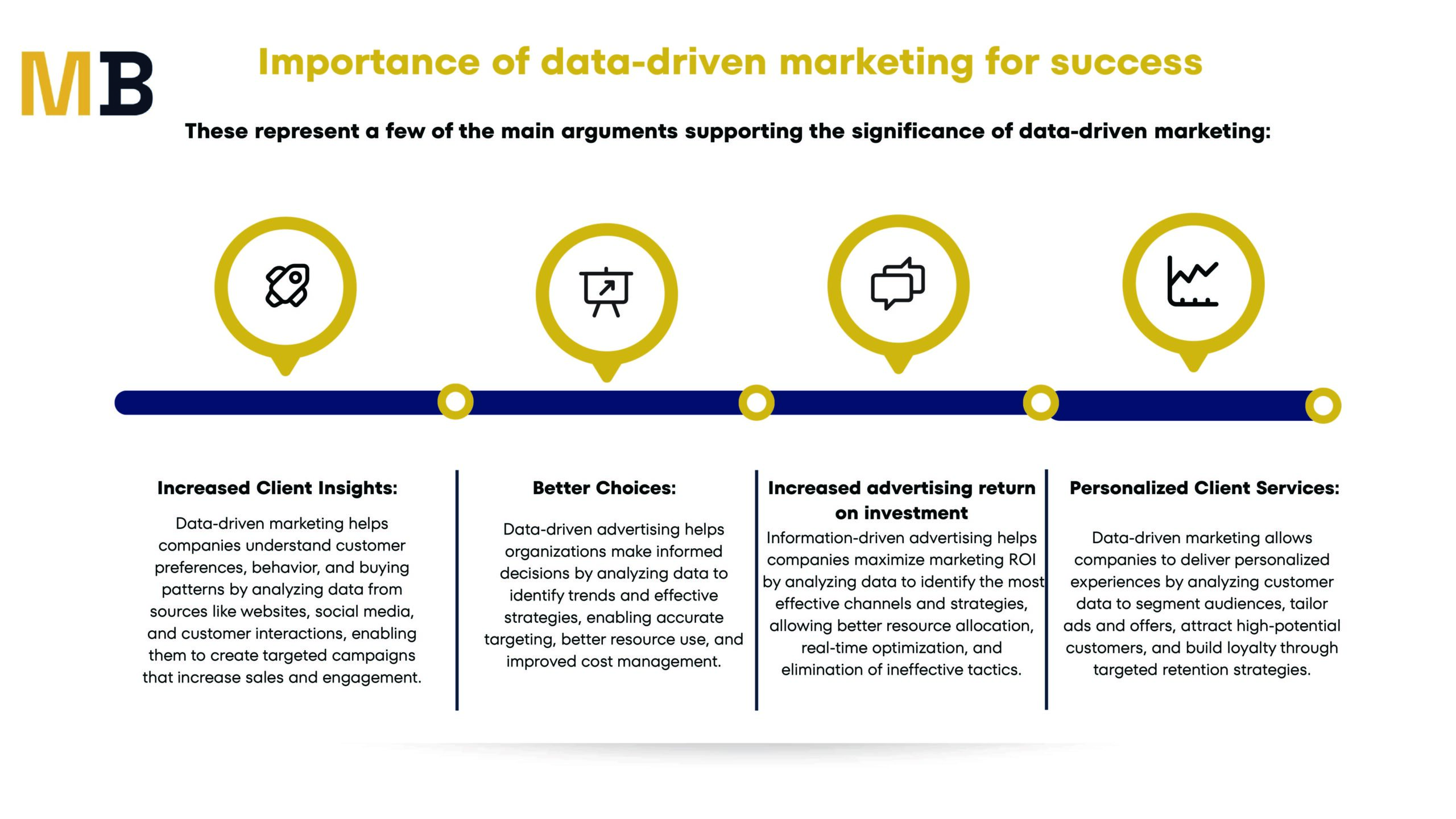
The importance of marketing based on information is becoming a key factor in today’s highly competitive business climate. These represent a few of the main arguments supporting the significance of data-driven marketing:
Increased Client Insights: Data-driven marketing enables companies to learn in-depth information about client tastes, behaviors, and buying trends. Companies are able to recognize their intended audience by analyzing data gathered from numerous sources, including interactions with clients, analytics from websites, and social network participation. This gives them a chance to develop individualized and focused advertising campaigns that connect with consumers, improving the likelihood of sales and sponsorship.
Better Choices: Data-driven advertising provides helpful information that aids organizations in making wise decisions. Advertisers can learn about patterns, developments, and connections that provide information about effective advertising strategies by analyzing data. With fewer guesses and dependence on suppositions based on information, choice-making can produce accurate concentration, utilization of resources, and cost management.
Increased advertising return on investment (ROI): Information-driven advertising enables companies to maximize the ROI of their marketing initiatives. Advertisers may determine which channels of advertising and strategies are generating the greatest number of sales and money by analyzing data. They are able to effectively allocate resources, optimize initiatives in real-time, and drop ineffective tactics owing to this insight. Companies can increase the return on investment and make greater use of their marketing by concentrating money on their most effective activities.
Personalized Client Services: Marketing based on information enables companies to provide customers with individualized experiences. Advertisers may split their intended audience and customize advertisements, deals, and suggestions depending on their tastes by utilizing information insights. The possibility of sales and ongoing company growth rises because of customization, which also promotes customer loyalty and trustworthiness.
The use of data-driven advertising assists companies in identifying high-potential client groupings and developing tactics to attract and keep them. Companies can find the best avenues, messaging, and rewards to entice and retain new clients by analyzing client information. Furthermore, marketing based on data enables companies to deploy focused persistence methods, including personalized communications, loyalty programmes, and satisfaction with clients programmes, that promote the development of long-lasting client connections.
Understanding Data-Driven Marketing
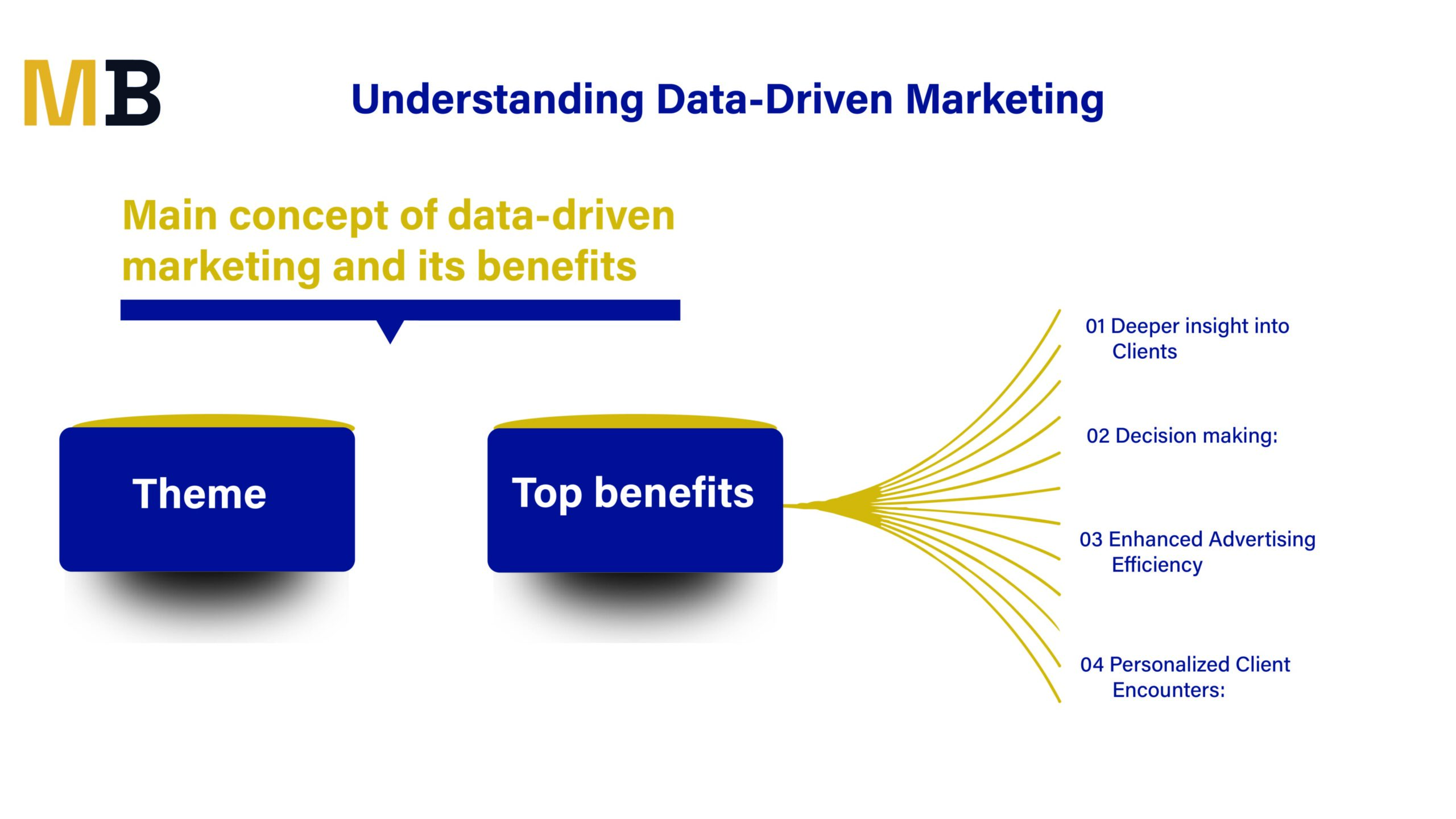
Main concept of data-driven marketing and its benefits
Theme:
Combining analytics and information to guide advertising approaches and decisions is the basic idea behind data-driven advertising. To acquire knowledge about consumer behavior, choices, and trends in the market, it comprises gathering, analyzing, and decoding information gathered from multiple sources. The next step is to use this knowledge to create personalized and specific advertising campaigns that are significantly destined to connect with consumers and provide the intended results.
Top benefits
Deeper insight into Clients: Marketing based on data gives companies a better insight into their clients. Companies can determine client categories, choices, and purchasing patterns by analyzing data. With better targeting and customization made possible by this knowledge, client involvement and conversion rates increase.
Decision making: A better ability to make decisions is provided by marketing that uses data. Companies can discover patterns, developments, and connections through the analysis of advertising data, which helps them, make more informed choices. As a result, it is possible to allocate resources more wisely, optimize budgets, and organize campaigns.
Enhanced Advertising Efficiency: Companies can maximize the effectiveness of their advertising by utilizing information to guide their advertising strategies. This includes figuring out the ideal times, messages, and platforms to reach the target audiences. By focusing advertising funds on initiatives that deliver the greatest possible return on expenditures, marketing based on data enables firms to make use of funds more effectively.
Personalized Client Encounters: Marketing based on information enables companies to provide customers with individualized experiences. Companies can tailor their advertising messages, suggestions, and deals to specific interests by using client data. Customization enhances the client experience overall, increases trust, and increases customer engagement.
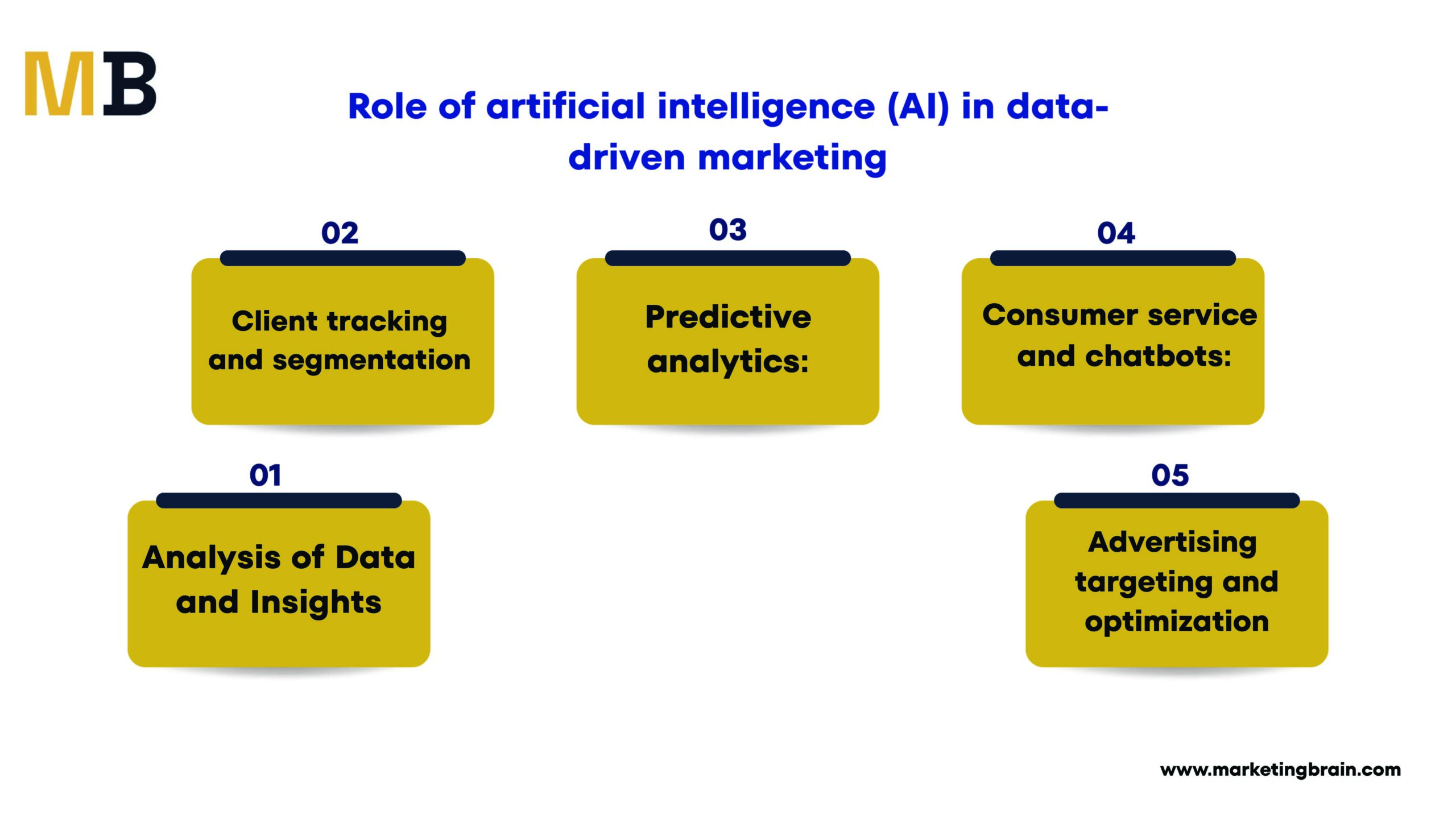
Role of artificial intelligence (AI) in data-driven marketing
By enabling advanced statistical analysis and digitization, artificial intelligence (AI) is a key component of data-driven advertising. Here are some significant contributions that artificial intelligence (AI) makes to data-driven marketing:
Analysis of Data and Insights: Artificial Intelligence (AI) is effective at analyzing massive quantities of data and finding insightful information. It can spot associations, correlations, and themes in the information, allowing advertisers to make informed choices. Algorithms based on artificial intelligence can analyze data that is both structured and unstructured from a variety of sources, including social networking sites, market research, and interactions with customers, to produce findings that may be put to use.
Client tracking and segmentation based on behavior, tastes, statistics, and past purchases are all possible using artificial intelligence (AI) algorithms. Artificial intelligence (AI) can discover various customer categories and develop customized advertising campaigns by utilizing data mining techniques. It assists advertisers in delivering pertinent messaging, goods, and deals to the proper audience, enhancing customer retention and the rate of conversion.
Predictive analytics: Algorithms based on artificial intelligence with the ability to accurately predict consumer patterns and make future predictions Artificial intelligence (AI) systems can predict client preferences, purchasing intentions, and turnover probability by looking at past information. To increase client satisfaction and preservation, advertisers can use this data to personalize conversations, optimize their advertising efforts, and give customized incentives.
Consumer service and chatbots: Chatbots powered by artificial intelligence (AI) utilize the processing of natural languages to comprehend and address consumer inquiries. They are able to respond to common inquiries, make individualized suggestions, and lead consumers through their buying experience. 24/7 customer assistance is made possible with chatbots, increasing satisfaction among clients and reducing the stress on human staff.
Advertising targeting and optimization: To improve the targeting of ads, artificial intelligence (AI) systems can examine user data, surfing habits, and advertisement indicators of performance. Instantaneous bidding and modeling for prediction are used by artificial intelligence-powered advertising services to offer personalized ads to the most pertinent segments of the audience. This improves the number of people who click through, boosts ad efficiency, and maximizes the return on advertisement investment.
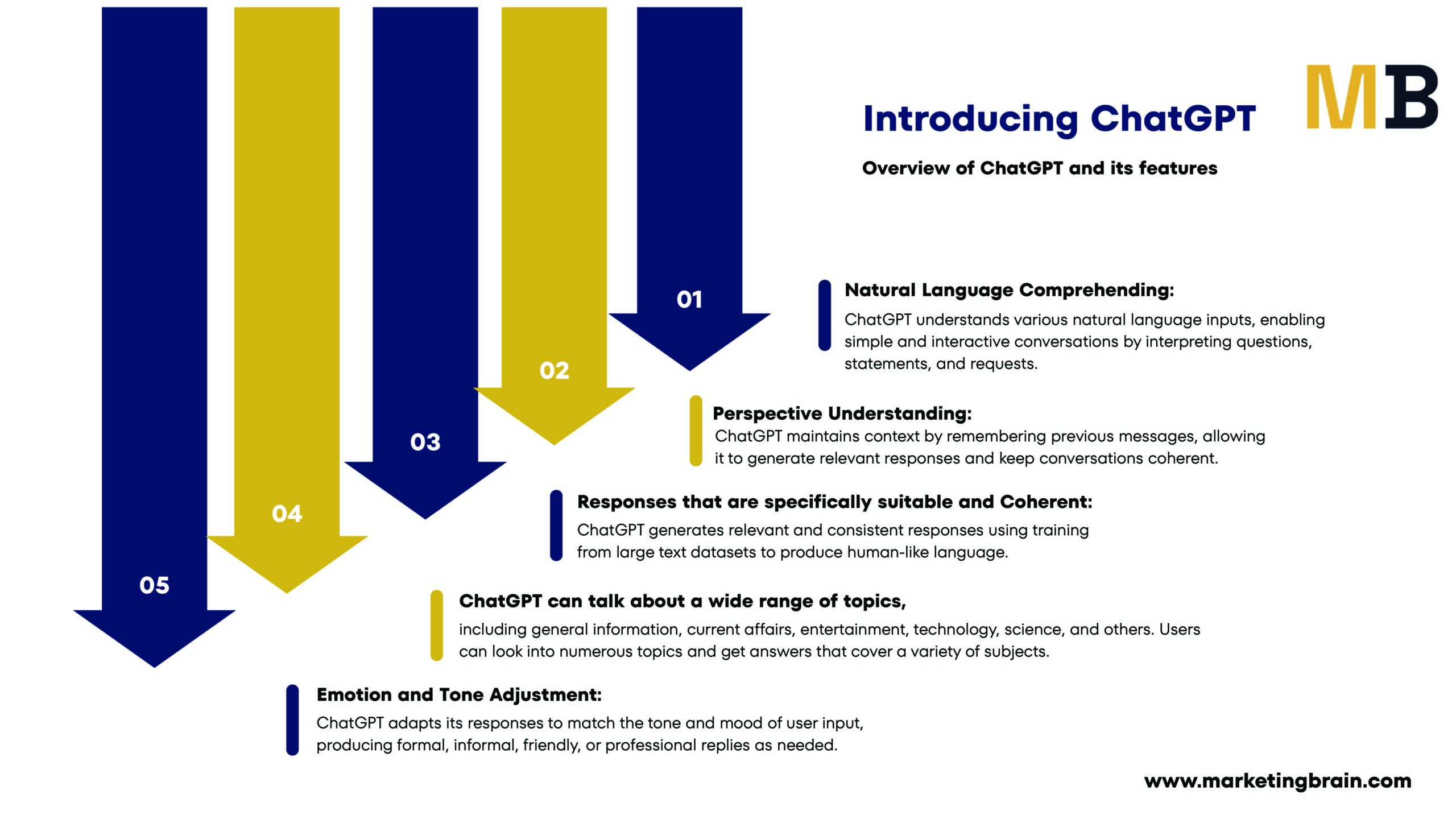
Introducing ChatGPT
Overview of ChatGPT and its features
As a language model, ChatGPT has a number of capabilities that allow it to participate in conversations and offer helpful responses. These are some of ChatGPT’s main attributes:
Natural Language Comprehending: ChatGPT is able to comprehend a variety of user inputs in natural language. It enables straightforward and dynamic conversations because it can understand demands, declarations, and inquiries.
Perspective Understanding: ChatGPT keeps the discussion in perspective by recalling earlier exchanges and replies. This makes it possible for it to produce socially appropriate responses, which improves the interaction’s coherence and significance.
Responses that are specifically suitable and Coherent: ChatGPT aims to produce solutions that are suitable and consistent. It uses the training it received on the enormous amount of text information to generate text that sounds like the language of humans.
ChatGPT can talk about a wide range of topics, including general information, current affairs, entertainment, technology, science, and others. Users can look into numerous topics and get answers that cover a variety of subjects.
Emotion and Tone Adjustment: ChatGPT may change its reactions to fit the tone and mood of user input. Depending on the situation and the intended discussion style, it might produce formal, informal, welcoming, or corporate replies.
Sentence finishing and recommendations: ChatGPT may provide different sentence constructions or recommendations for phrase completion. By producing thoughts or providing alternative wording, it helps users write creatively, discuss ideas, or get beyond writer’s block.
ChatGPT can help with language-related tasks by translating single words or quick phrases among several languages. It is crucial to keep in mind, nevertheless, that it could not be as precise or dependable as expert translation services.
Continuous Training and Improvements: Based on user input and continuing research, OpenAI continues to develop and enhance ChatGPT’s functionalities. The performance in general and the user interface are improved by frequent upgrades and improvements.
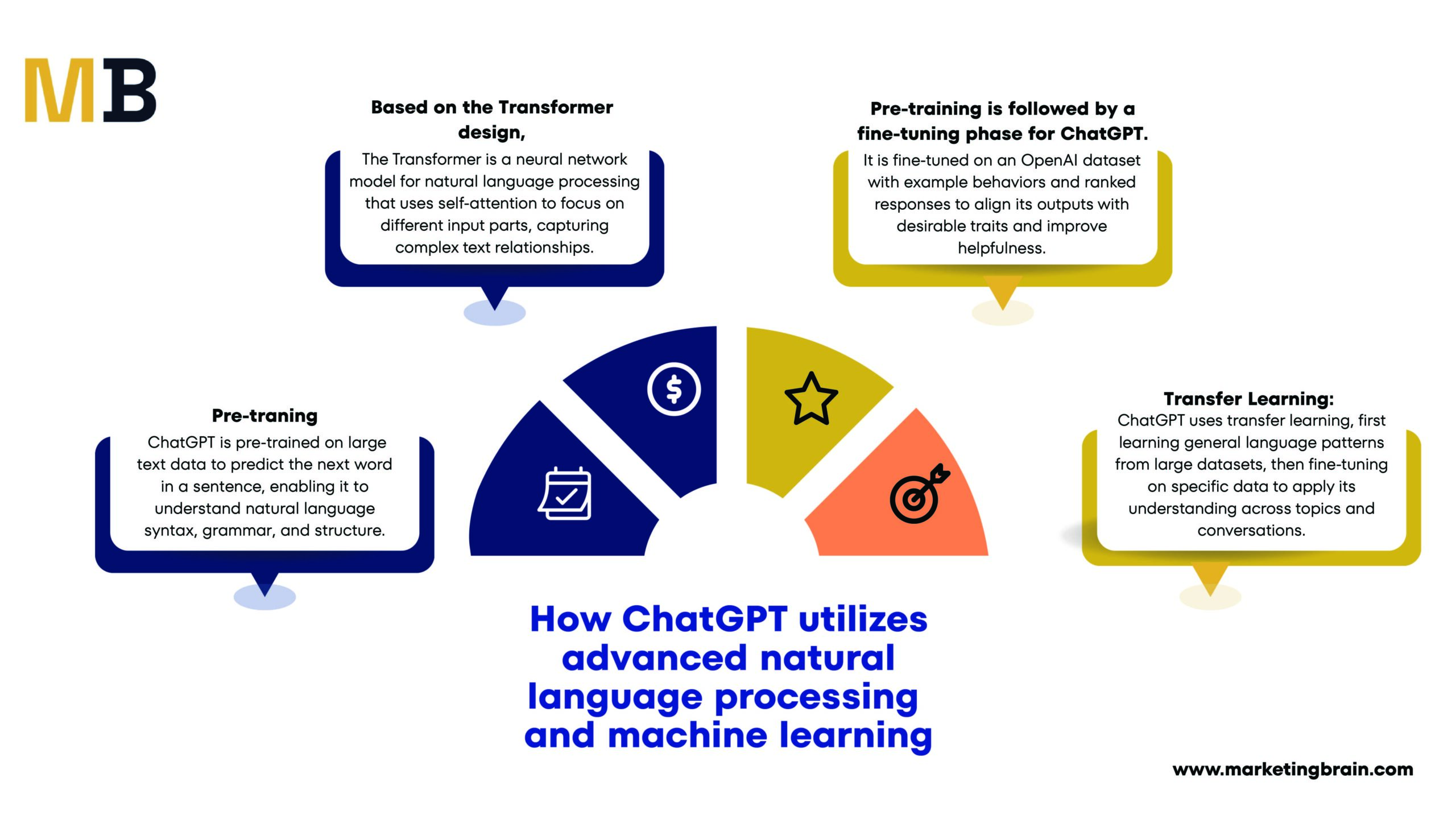
How ChatGPT utilizes advanced natural language processing and machine learning
Comprehensive NLP (natural language processing) and artificial intelligence (AI) techniques are used by ChatGPT to comprehend and provide text-based solutions. A description of how these developments are used is provided below:
Pre-training: ChatGPT is first trained using a sizable corpus of online text data. Pre-training teaches it to anticipate what comes next in a sentence depending on the setting of the words that came before. Through this process, the model can develop an in-depth comprehension of natural language’s syntax, grammar, language, and construction.
ChatGPT is based on the Transformer design, a particular kind of model of neural networks created especially for applications involving the processing of natural languages. By using self-awareness techniques, the Transformer’s design enables the model to concentrate on various components of its input stream as it processes it. As a result, the model is able to recognize intricate connections in the text.
Pre-training is followed by a fine-tuning phase for ChatGPT. It learns using a particular database produced by OpenAI, which contains examples of appropriate behavior and rankings of various replies. The model’s behavior is brought into line with desirable traits at this adjusting stage, which also enhances the model’s ability to produce helpful replies.
Transfer Learning: The technique of transfer learning is used in ChatGPT’s initial training and finalization processes. During initial training on huge collections, the model picks up broad language trends and expertise, and it then fine-tunes that information on a specific set of data. By using this method, the model’s comprehension can be applied to a variety of themes and conversation scenarios.
Continuous Enhancement and Studies: OpenAI is constantly working to improve ChatGPT’s abilities. In light of suggestions from users and recent developments in natural language processing and machine learning, the model is frequently modified and improved. The model’s effectiveness and weaknesses are fixed through incremental revisions.
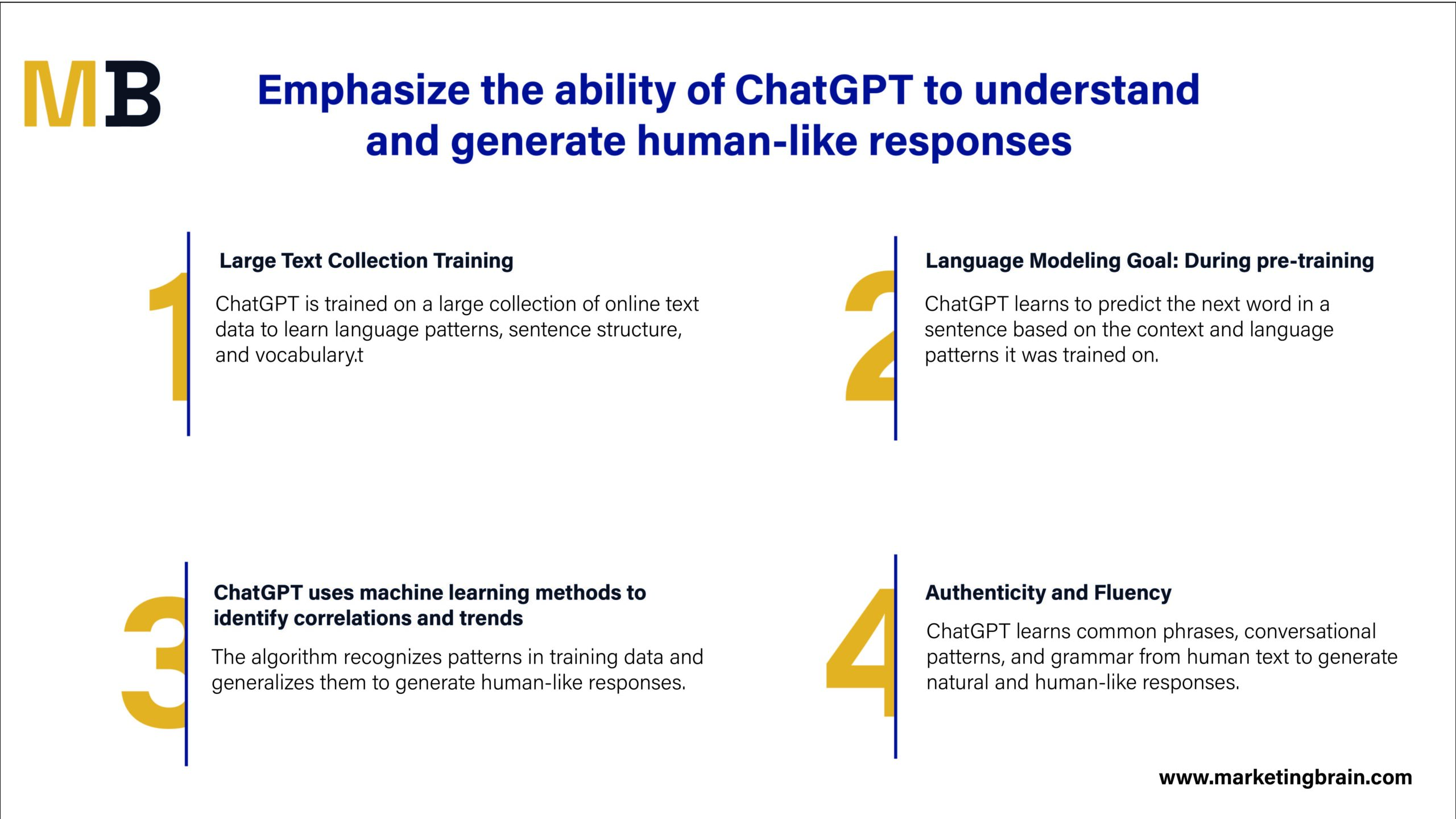
Emphasize the ability of ChatGPT to understand and generate human-like responses
By using modern natural language processing, or NLP, methods and experimenting on enormous volumes of text data, ChatGPT is able to comprehend and produce replies that resemble those of a human being. This is done by ChatGPT in the following ways:
Large Text Collection Training: ChatGPT is trained using a vast library of text data that was gathered from a variety of online sources. The model is exposed to a wide variety of language trends, the structure of sentences, and the usage of vocabulary because of the training data. ChatGPT develops thorough knowledge about languages through study of this varied sample.
Language Modeling Goal: During pre-training, ChatGPT develops the ability to anticipate the following word in a phrase based on the context of the words that came before it. To accurately represent syntax, grammar, language, and the total language, the model is encouraged by the language’s modeling goal.
ChatGPT uses machine learning methods to identify correlations and trends in the data used for training. Pattern Recognition and Generalizing. The algorithm generalizes these trends through inference from multiple instances to produce replies that mimic the language of humans and display comparable structures and traits.
Authenticity and Fluency: ChatGPT prioritizes producing responses that come across as organic and dynamic. It gains knowledge of frequent phrases, informal gestures, and grammatical patterns seen in human-generated text through training. This enables it to provide replies that are more convincing and human.
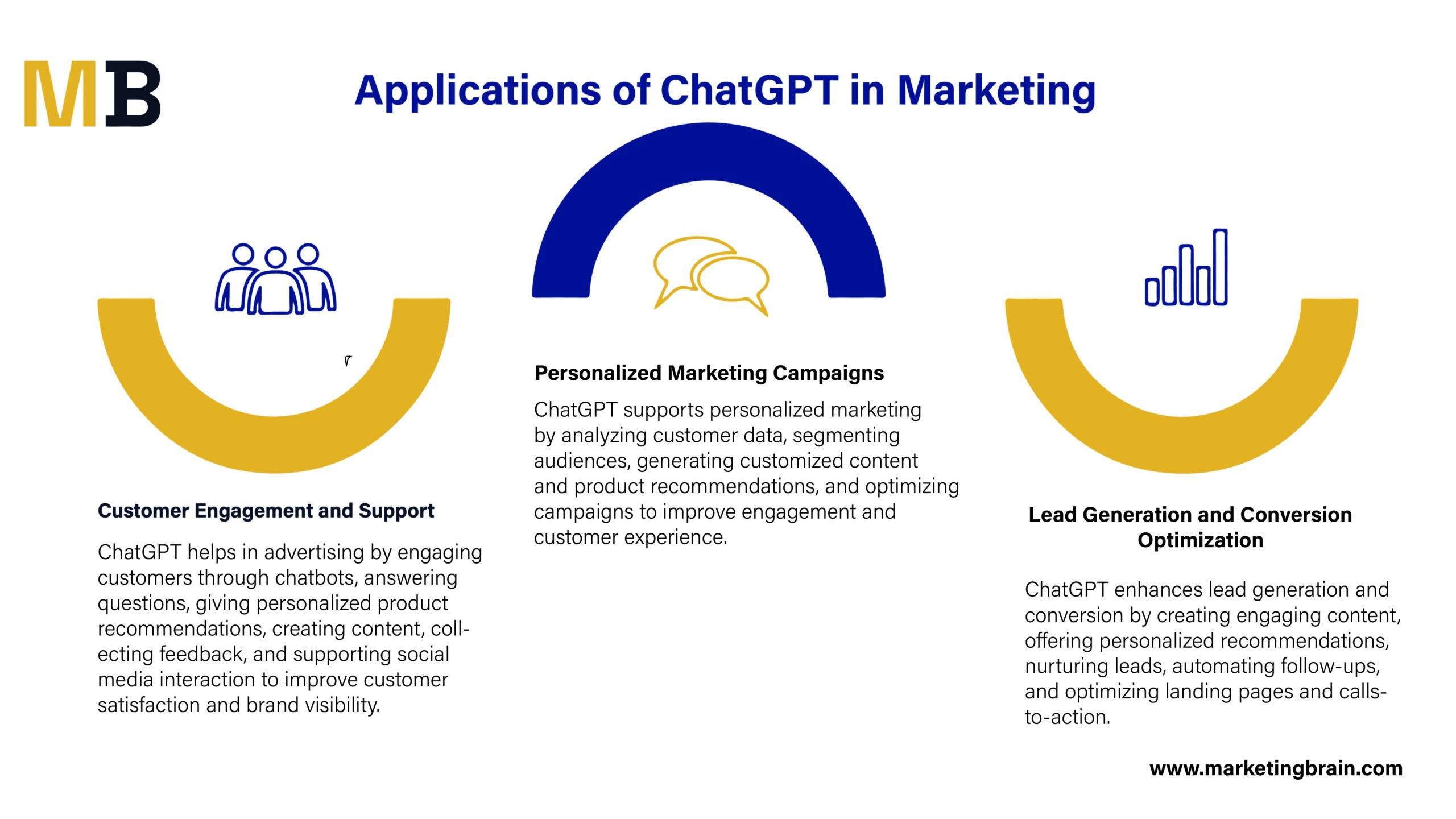
Applications of ChatGPT in Marketing
Customer Engagement and Support
By acting as an artificially intelligent assistant or chatbot that communicates with consumers instantly, ChatGPT promotes client engagement and assistance in advertising. It can answer common inquiries, make personalized suggestions for goods, deliver automatic responses, and lead clients through the purchasing process. Due to its interactive capabilities, ChatGPT may interact with clients, offer 24/7 service, collect valuable input, and improve the visibility of brands on social media platforms. Additionally, it can provide ideas for creating material and help with the construction of personalized campaigns for email marketing and engaging material. Advertisers may enhance client interaction, offer timely support, and give individualized encounters by utilizing ChatGPT’s abilities, thereby improving client satisfaction and commitment.
Here are a few ways that ChatGPT can be used in advertising to connect with and help clients:
- ChatGPT can serve as the foundation for artificial intelligence and chatbots that communicate with clients in real time.
- Personalized recommendations for products can be created using ChatGPT by examining client tastes, past purchases, and browsing habits.
- ChatGPT can help with the creation of dynamic material that interests users.
- Client Feedback and Surveys: By producing linguistic challenges or questionnaires, ChatGPT may support client input and surveys.
- Social Media Engagement: By creating linguistic replies to user comments, messages, or postings on social networking sites, ChatGPT can help with engagement on social media.
Personalized Marketing Campaigns
An important role in assisting customized advertising approaches is played by ChatGPT. ChatGPT helps advertisers design specialized and individualized marketing by examining client information and engagements. By recognizing various categories of customers according to the population, tastes, and behavior, it aids in segmenting clients. With this knowledge, advertisers can adapt their language, deals, and information to meet the specific requirements of each segment. The capacity of ChatGPT to produce customized suggestions improves customer satisfaction by recommending items or offerings that fit certain tastes. Additionally, ChatGPT supports customer journey optimization by distributing customized communications and incentives at the appropriate connections. Using ChatGPT’s abilities to create different content and measure consumer reaction, marketers may do split-testing. Because ChatGPT is interactive in nature, it may collect useful input from clients through surveys, allowing advertisers to hone their tactics. ChatGPT assists advertisers by utilizing statistical analysis to foresee future client behavior and modify their ads appropriately. In general, ChatGPT gives marketers the tools they need to offer individualized, pertinent, and focused encounters that increase customer pleasure, effectiveness of campaigns, and involvement.
Here are a few ways that ChatGPT can be used in personalized marketing campaigns:
- Client Segmentation: ChatGPT offers the ability to analyze client information, such as the population, past purchases, and viewing patterns, to pinpoint different categories of consumers.
- Personalized Product Recommendations: Utilizing specific client tastes and prior interactions, ChatGPT can produce personalized suggestions for products.
- Creation of Variable Information: ChatGPT can help create dynamic, customized content for various advertising campaigns.
- Customer Journey Optimization: ChatGPT may examine client habits and exchanges to pinpoint crucial areas in the client’s experience.
- A/B Testing and Ad Optimization: ChatGPT can help with both A/B testing and advertising optimization.
Lead Generation and Conversion Optimization
In order to support lead generation and conversion optimization, ChatGPT is a valuable tool. It assists advertisers in writing appealing web page material that draws visitors in and motivates them to take the actions they want. ChatGPT boosts conversion rates by recommending offers that are appropriate to the customer based on personalized suggestions. Real-time interaction with leads allows it to classify them and nurture them with pertinent information. Lead monitoring is automated using ChatGPT, resulting in prompt and individualized interaction. By offering ideas and suggestions for enhancing landing pages and forms, it also aids in increasing conversion rates. ChatGPT assists in establishing trust and lowering barriers by responding to consumer questions and issues through the purchasing procedure. It also makes use of client input to spur iterative enhancements and optimize the transformation process over time. Using its interactive abilities and insights based on data, ChatGPT improves lead generation efforts, personalizes consumer expertise, and optimizes the rate of conversion.
Here are a few ways that ChatGPT can be used in lead generation and conversion optimization:
- Engaging Landing Page text: ChatGPT can help with the development of persuading and captivating homepage text.
- Personalized suggestions: According to customer interactions and tastes, ChatGPT can offer personalized goods or service suggestions.
- Lead screening and nurturing: ChatGPT can interact in real time with site visitors or leads, posing screening inquiries to discover prospective clients.
- Automated Lead Follow-up: Using customer interactions and tastes, ChatGPT can send personalized messages or emails to streamline lead procedure follow-up.
- Conversion Rate Optimization: ChatGPT can help with the optimization of conversion rates by offering perceptions and recommendations for enhancing pages for landing, forms, and call-to-action components.
Data Analysis and Insights
The usage of ChatGPT in information analysis as well as insights helps users comprehend and get useful details from their own data. Users can acquire insights through conversation engagements by using it to examine and comprehend complicated data sets using the processing of natural language. Customers may explore and analyze data using ChatGPT to find developments, patterns, and associations. In order to facilitate data storytelling and improve collaboration, ChatGPT may also produce written explanations of visualizations. Due to its training in industry-specific information, it may offer domain-specific insights and be used in a variety of scenarios. Furthermore, ChatGPT can help make data-driven choices by using statistical analysis to estimate future events. ChatGPT assists users in retrieving particular data for study by enabling queries and filtering across huge databases. In general, ChatGPT enables consumers to more efficiently traverse and gain information from information, increasing their ability to make decisions. However, it’s crucial to ensure adequate verification and analysis of the obtained insights as well as to take into account any possible model limitations.
By utilizing its machine learning abilities along with access to a wealth of knowledge, ChatGPT helps analyze data and findings. It can help in a number of ways:
- ChatGPT’s ability to analyze and comprehend large sets of data makes it possible to spot trends, patterns, and relationships.
- ChatGPT can help with data exploration by responding to queries and giving background information on the information being analyzed.
- Data visualization: ChatGPT may produce textual highlights or explanations of visualizations and charts, facilitating users’ interpretation and communication with information graphically.
- Domain-specific Analyses: ChatGPT can be taught in specific sectors or domains, enabling it to offer specialized analyses.
- Predictive Analysis: ChatGPT can generate predictions or offer insights into future outcomes by using previous information and statistical modeling approaches.
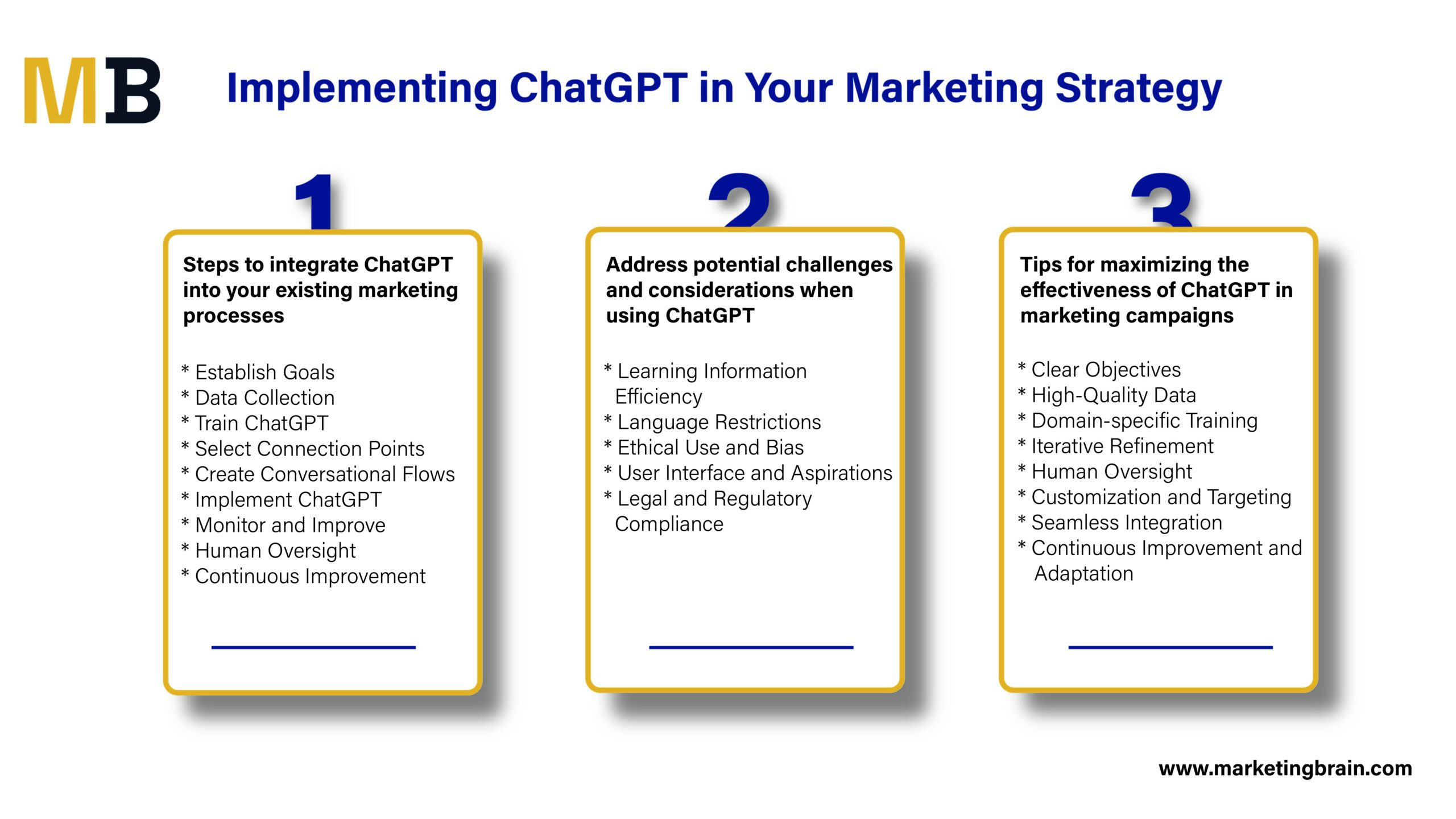
Implementing ChatGPT in Your Marketing Strategy
1. Steps to integrate ChatGPT into your existing marketing processes
There are numerous phases involved in implementing ChatGPT into your current marketing procedures:
- Establish Goals: Clearly state the goals you hope to accomplish with ChatGPT integration. Determine which parts of your advertising procedures ChatGPT can improve, such as lead generation, assistance for customers, personalized advertising, or interaction with clients.
- Data collection: Gather pertinent information that will be utilized to train and improve ChatGPT. Customer contacts, past advertising information, FAQs, product details, and other relevant material may be included in this.
- Train ChatGPT: Make use of the gathered data to instruct ChatGPT so that it can take into account your particular advertising scenario. Adjust the model to fit the personality, aesthetic, and tastes of your target audience. Data analysts or experts in artificial intelligence may be needed for this step.
- Select Connection Points: Decide where ChatGPT will be incorporated into your advertising workflows. This might apply to any relevant channels, such as your website, accounts on social media, email campaigns, assistance systems, etc.
- Create Conversational Flows: Create conversation patterns that complement your advertising objectives and target audience requirements. Draw up a list of various user situations, prospective inquiries, and suitable answers. To connect with customers and successfully respond to their inquiries, take reactive as well as proactive interactions into account.
- Implement ChatGPT: Using the platforms or tools’ offered application programming interfaces or SDKs (software development kits) includes ChatGPT in the defined contacts. Ensure seamless interaction with the tools and network you already have set up for marketing.
- Monitor and Improve: Continue to keep an eye on how ChatGPT performs in actual conversations. Gather client and stakeholder input to pinpoint areas that need development. Based on the learned insights, adjust the discussion flows, data used for training, or variables.
- Even though ChatGPT is capable of performing many activities on its own, human oversight is still necessary. Allow devoted staff members to examine and handle conversations to ensure that replies are accurate, relevant, and suitable. For difficult or delicate questions, human assistance is essential.
- Continuous Improvement: Over time, keep improving and optimizing your ChatGPT setup. To take advantage of fresh capabilities and upgrades, keep up with the most recent developments in machine learning and the processing of natural languages.
2. Address potential challenges and considerations when using ChatGPT
Using ChatGPT for advertising presents a number of difficulties and factors to take into account:
- Learning Information Efficiency: ChatGPT’s effectiveness can be considerably impacted by the caliber and applicability of the data that was used to train it. To avoid discrimination and increase precision, it is essential to make certain that the information used for training accurately depicts the variety of client interactions and includes an extensive variety of circumstances.
- Language Restrictions: ChatGPT may occasionally fail to comprehend complicated or nuanced language correctly or produce suitable responses. It may have trouble recognizing sarcasm, idioms, or terminology used in a particular setting. To make sure they correspond with the required advertising communication, care ought to be taken to carefully examine and verify the replies produced by ChatGPT.
- Ethical Use and Bias: Due to flaws present in the simulated data, ChatGPT may unintentionally produce biased or unfair responses. Monitoring and reducing preconceptions is crucial to ensuring that ChatGPT is bound by moral standards and refrains from encouraging negative preconceptions or unfair conduct.
- User Interface and Aspirations: Although ChatGPT can offer helpful support, it might not always live up to users’ expectations or offer the same degree of knowledge as human agents. Monitoring customer expectations and outlining ChatGPT’s limitations might help prevent frustration and preserve a great customer experience.
- When incorporating ChatGPT into advertising processes, make sure you comply with all applicable legal and regulatory standards. This entails abiding by any industry-specific rules that regulate advertising communications, as well as privacy regulations, authorization administration, and any other applicable laws. Marketers may effectively employ ChatGPT while limiting potential hazards and providing an outstanding user experience by mindfully taking into account these obstacles and proactively addressing them.
3. Tips for maximizing the effectiveness of ChatGPT in marketing campaigns
Take into account the following advice to make ChatGPT as effective as possible in marketing campaigns:
- Clear Objectives: Specify the particular goals you want the ChatGPT integration to help you reach. Having specific objectives will direct the way you execute your strategy, whether it’s to increase sales, enhance personalized advertising, or increase interaction with clients.
- To enhance ChatGPT’s performance, make sure that the learning data are of high caliber and variety. To learn the model efficiently, use information that accurately represents the audience being studied and spans a variety of circumstances.
- Domain-specific Training: Use domain-specific expertise pertinent to your advertising strategy to improve ChatGPT. You may improve the model’s comprehension and produce more precise results by exposing it to facts and jargon particular to the marketplace.
- Iterative Refinement: Constantly keep an eye on the model and make adjustments based on feedback from customers and performance indicators. To enhance ChatGPT’s precision and relevance over time, change the source of training information, adjust variables, and change discussion streams frequently.
- Employ devoted employees to assess and regulate ChatGPT exchanges as part of the oversight process. Reactions are true in accordance with brand rules and deliver the ideal client experience thanks to human judgment. Any incorrect or prejudiced answers must be addressed right away.
- Customization and Targeting: Make use of ChatGPT’s features to send tailored advertisements and advice. Utilize consumer data to identify audience segments, determine audience preferences, and then modify offers and answers accordingly.
- Integrate ChatGPT into your advertising platforms and interactions without difficulty. To deliver an effortless and integrated client encounter, make sure design and content remain the same throughout every interaction with the client.
- Continuous Improvement and Adaptation: Keep up with the most recent developments in machine learning and the processing of natural languages. Accept new functions, methods, and patterns that can improve ChatGPT’s performance in your advertising efforts.
You may use ChatGPT to improve client interactions, increase conversions, and maximize the effectiveness of your advertising by following the advice in this article. Using ChatGPT in your advertising campaigns will help you get the greatest results if you monitor it frequently, make adjustments, and focus on your customers.
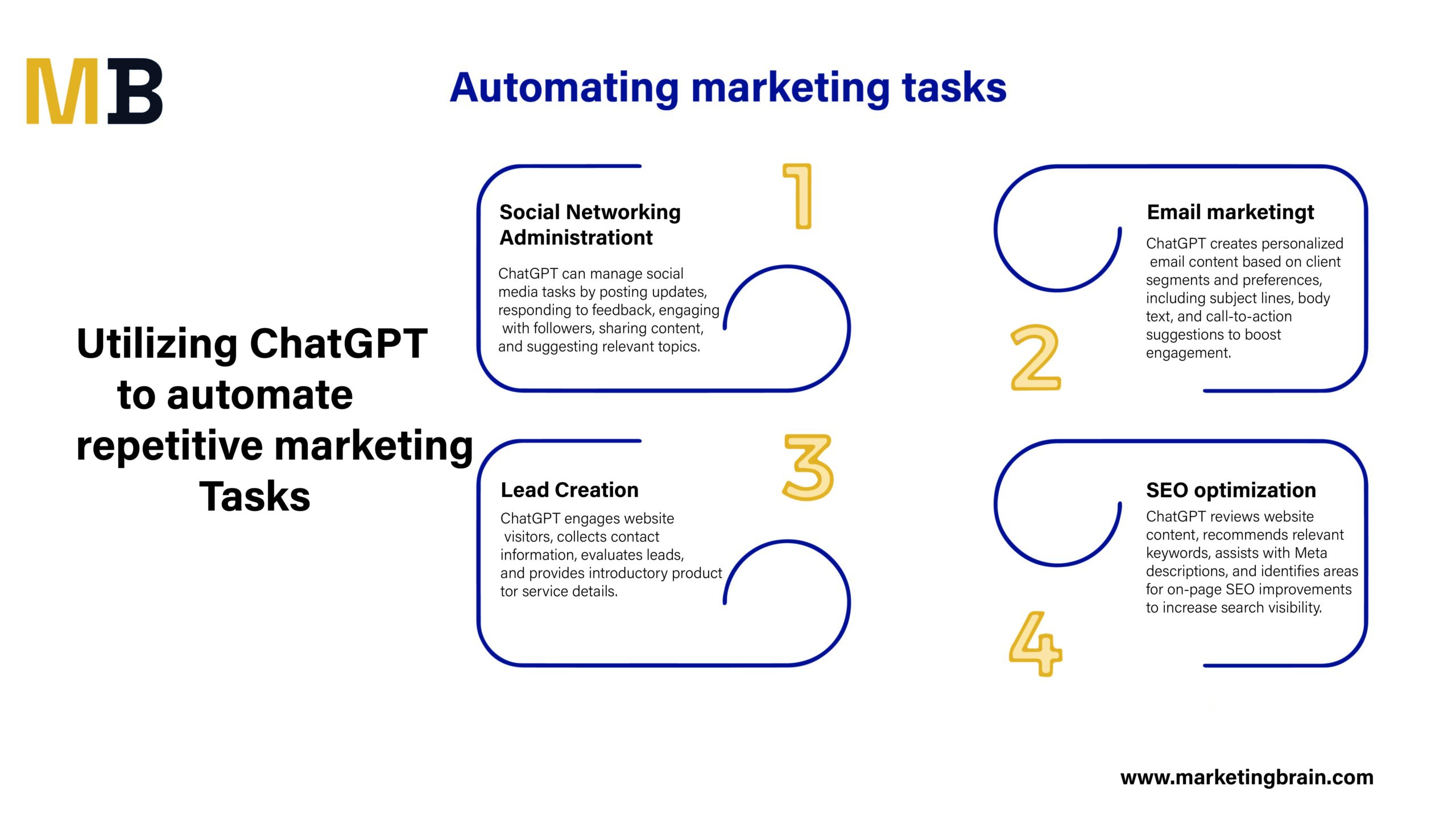
Automating marketing tasks
Utilizing ChatGPT to automate repetitive marketing tasks
ChatGPT can be a useful tool for automating routine marketing processes, increasing productivity, and giving marketers more time to concentrate on strategic initiatives. The following is how to use ChatGPT for automating similar tasks:
Social Networking Administration: ChatGPT may be taught to manage common social media duties, including posting updates on schedule, answering feedback, and interacting with subscribers. It can share material, offer approved solutions to frequent questions, and even monitor online trends to propose pertinent posting subjects.
ChatGPT can manage simple assistance requests by giving prompt answers to the most common questions. Customers may receive shipment notifications, technical instructions, or pointers to pertinent resources. 24/7 accessibility of ChatGPT guarantees quick responses and increased customer satisfaction.
Email marketing: By creating personalized content for emails according to client groupings and preferences, ChatGPT may streamline some aspects of email advertising initiatives. In order to speed up the creation of emails and boost participation, it may produce headlines, text in the body, and suggest call-to-action language.
Lead Creation: ChatGPT can help in generating leads by conversing with visitors to the website and gathering their contact information. As an electronic marketing assistant, it may evaluate leads, gather pertinent information, and give introductory details about goods or services.
Analysis and reporting of data are capabilities of ChatGPT, which can also provide reports and offer insights. It can do computations, visualize outcomes, and offer brief explanations while also dynamically processing data from many sources. By doing so, marketers can achieve time savings from traditional analysis of data and gain quick access to actionable insights.
ChatGPT may help with ad copywriting by coming up with enticing news stories, convincing explanations, and powerful call-to-action keywords. It may offer a variety of choices, enabling advertisers to select the best ad variations to enhance the effectiveness of their campaigns.
SEO optimization: ChatGPT can offer SEO advice by reviewing the content of websites, recommending pertinent keywords, or offering assistance with Meta description writing. It can reveal areas where on-page optimization and visibility in search engines can be improved.
Examples:
Here are some instances of various marketing activities that ChatGPT can automate:
- Social networking posting and scheduling: ChatGPT can be combined with social media administration programmes to automatically post and schedule material on a variety of channels on social media. Advertisers may teach ChatGPT to create captivating blog captions, choose suitable hash tags, and time-schedule posts.
- Chatbots for customer service: ChatGPT may streamline client encounters by training chatbots on frequently asked queries and typical assistance concerns. It can give quick responses, walk users through solving problems, and, if necessary, elevate complicated inquiries to real people.
- Automation of email advertising initiatives is a service that ChatGPT offers. Utilizing consumer information and classification, it can provide personalized email messages, incorporating headlines and body content. ChatGPT is capable of sending personalized messages at the appropriate moment by using workflows with automation that advertisers can build up to be started by specific occurrences or activities.
- Lead certification and developing procedures can be automated with ChatGPT. It can gather data, evaluate leads according to established standards, and deliver first-hand details about a product or service by interacting with visitors to the site via chatbots. The process of lead creation and handling is made more efficient by this process of automation.
- Tasks, including reporting and analyzing data, can be automated with ChatGPT. ChatGPT may be taught by advertisers to process and analyze advertising information, produce reports, and offer insights. It enables marketers to have quick information at their fingertips that may be used to make decisions by performing estimations, visualizing data, and providing informative summaries.
- Advertising Content Generation: ChatGPT has the ability to automatically create ad copy for online marketing campaigns. ChatGPT can produce appealing titles, explanations, and call-to-action phrases in response to requests or criteria from advertisers. This machine learning facilitates marketing experimentation with many advertisement variations while also expediting the advertisement creation procedure.
Success stories
Snap Inc.
Artificial intelligence for conversation has been included in the widely used communication programme Snapchat by its founders. The My AI bot can be contacted at any moment for a conversation, to assist with concerns, or just for enjoyment. It shows up as a constant companion in the customer’s list of friends. Providing suggestions for an ideal birthday present for your best friend, assisting with the planning of a trip to the mountains for an extended weekend, or making supper suggestions are just a few of the recommended applications for Snapchat.
Microsoft
Microsoft has supported ChatGPT for many years and has made a significant investment in OpenAI, the organization that developed it. The ChatGPT chatbots Bing search tool is now powered by the same large-scale language models (LLMs) that underlie the ChatGPT chatbots GPT-3 and GPT-4, allowing customers to conduct searches while getting responses via an interface that speaks instead of the conventional list of URLs. Additionally, Microsoft is pressing ahead with intentions of integrating the latest innovations into a variety of its well-known computer programmes, including Word and Excel, among others. Additionally, it makes use of Codex, an altered GPT-3 designed specifically for writing code for computers, to offer GitHub Co-Pilot auto-complete programming recommendations.
Expedia
With the release of ChatGPT, a chatbot that was developed on top of OpenAI’s GPT-3 LLM (large language models), generative artificial intelligence (AI) gained attention early in the previous year. Certainly, chatbots powered by artificial intelligence have existed in the past; examples include Apple’s Siri and Amazon’s Alexa. Customers were astounded by ChatGPT’s ability to maintain discussions that were far more advanced. It is also capable of creating text to a standard level that frequently qualifies for humans, encompassing stories, essays, scripts, presentations, prose, and some code for computers.
Coca Cola
The multinational soft drink company and experts Bain & Company, Inc. have joined forces with the goal of employing ChatGPT to help with advertising and delivering individualized customer interactions. In accordance with a publicity statement, it intends to create customized advertising copy, graphics, and advertising using the software and the creative graphic tool Dall-E.
Udacity
Udacity, an operator of online courses, uses GPT-4 to build a smart avatar instructor that is able to provide customers with customized advice and criticism. It is intended to assist them in solving challenging puzzles by providing comprehensive clarifications that may be adjusted to the particular learner. It additionally has the ability to translate if a course isn’t being provided in a learner’s first language and review ideas while clarifying technical terminology.
Conclusion
Consequently, ChatGPT establishes itself as an effective means and a trump card for attaining top-notch marketing in the current digital environment. ChatGPT allows individualized customer interaction, assistance, and help according to its cutting-edge processing of natural languages and artificial intelligence abilities. Businesses can improve their lead generation (the process of generating consumer interest for a product or service with the goal of turning that interest into a sale), conversion optimization, and data analytics operations by incorporating ChatGPT into their present advertising processes. ChatGPT’s capacity to comprehend and provide responses that are comparable to humans encourages genuine communication, establishes confidence, and improves relationships with customers. To ensure authenticity and uphold consistency with the brand while optimizing ChatGPT’s advertising efforts, it is necessary to take such possible problems into account.
ChatGPT has the ability to transform advertising strategies, streamline tiresome operations, and unleash novel heights of achievement in an ever-changing and cutthroat advertising marketplace with correct deployment and ongoing improvement. In the age of based-on-data advertising, marketers can offer amazing client services, accomplish their objectives, and remain ahead of the curve by adopting ChatGPT as an advertising trump card.